Nearly a decade after Hurricane Harvey exposed the vulnerability of one of America’s largest cities, Houston is betting that better data can help reduce the impact of the next major flood.
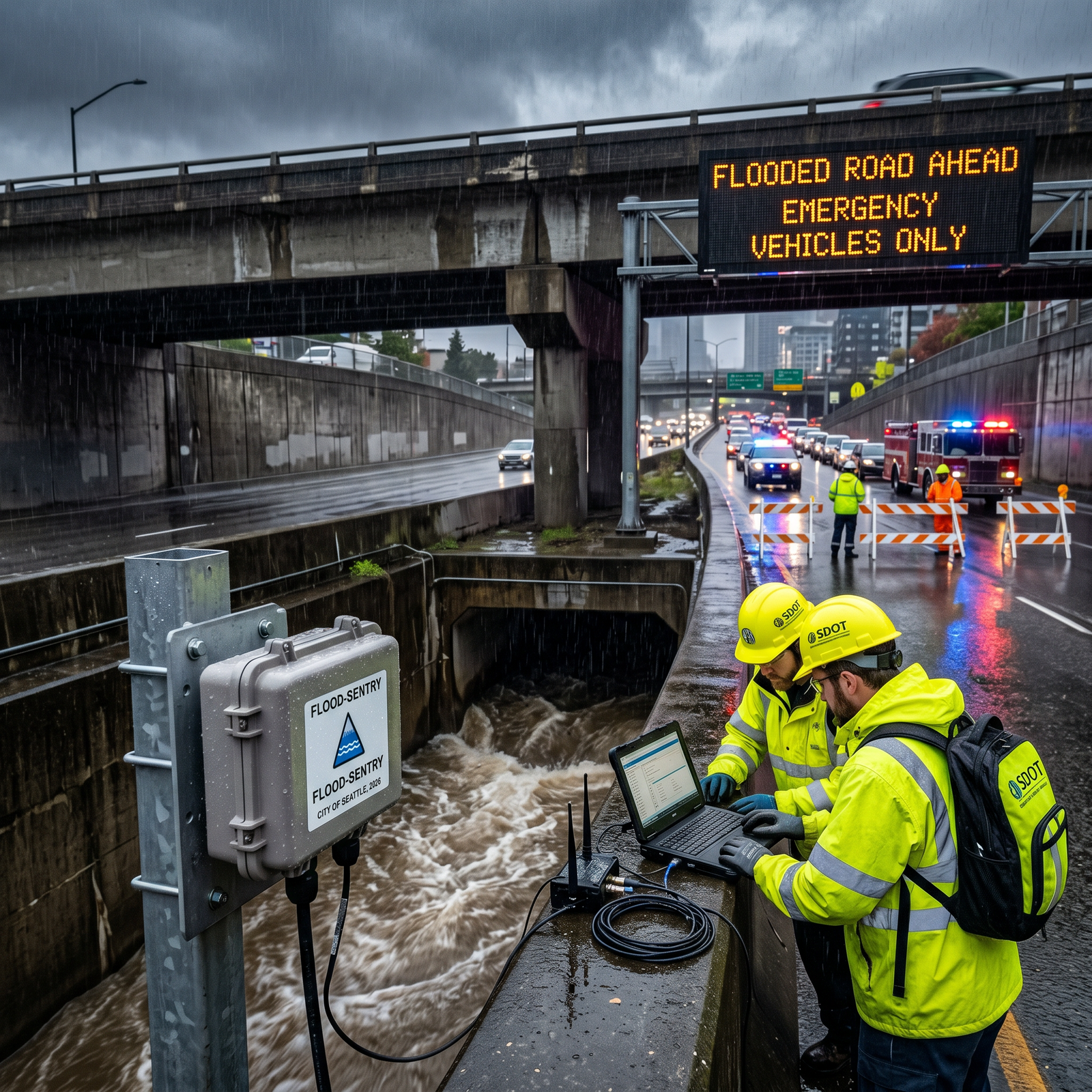
The city has partnered with Xylem to deploy a network of flood-monitoring sensors designed to provide real-time visibility into rising water levels across flood-prone areas. The system automatically alerts officials when water reaches critical thresholds, enabling faster responses to dangerous conditions and helping direct residents away from flooded roads and underpasses.
How Houston Is Using Flood Monitoring Technology
On the surface, it is a flood management project.
In reality, it reflects a much larger shift taking place across the water sector.
For decades, cities primarily addressed flood risk through physical infrastructure—storm drains, detention basins, pumps, levees, and flood barriers. Those assets remain essential. But as climate volatility increases and extreme weather events become more frequent, infrastructure alone is no longer enough.
Why Real-Time Water Data Is Becoming Critical Infrastructure Increasingly, cities are investing in information.
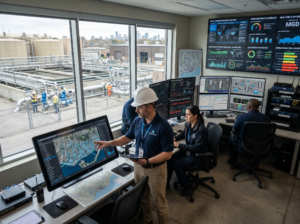
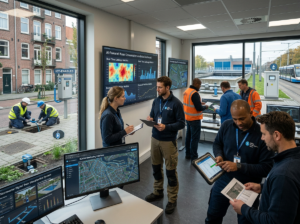
Houston’s flood-monitoring network is part of a broader movement toward real-time water intelligence, where sensors, analytics platforms, and automated alerts help utilities and municipalities identify risks earlier and respond more effectively.
The goal is not simply to monitor floods.
It is to create greater situational awareness across increasingly complex water systems.
The Rise of Smart Water Infrastructure
This shift is occurring nationwide. Utilities and municipalities are deploying smart sensors, predictive analytics, digital twins, and AI-enabled platforms to improve resilience, optimize operations, and strengthen emergency response capabilities.
What was once viewed as an innovation initiative is rapidly becoming a core component of modern infrastructure strategy.
From Physical Infrastructure to Digital Infrastructure
The most important takeaway from Houston’s initiative is not the deployment of dozens of sensors.
It is the recognition that resilience increasingly depends on the ability to collect, interpret, and act on data in real time.
Historically, cities learned about flooding after roads became impassable or residents called emergency hotlines. Modern monitoring systems create the potential to identify developing risks before they escalate into major disruptions.
That capability has implications far beyond flood management. The same principles are driving investments in leak detection, wastewater monitoring, asset management, water quality tracking, and predictive maintenance across the water sector.
What This Means for Water Utility Executives
The lesson extends far beyond Houston.
As climate volatility, urban growth, and infrastructure challenges continue to intensify, the competitive advantage will increasingly belong to utilities and municipalities that can see problems sooner, predict them more accurately, and respond faster.
In that environment, data becomes as important as physical infrastructure itself. Cities once fought floods with concrete. Increasingly, they are fighting them with data.