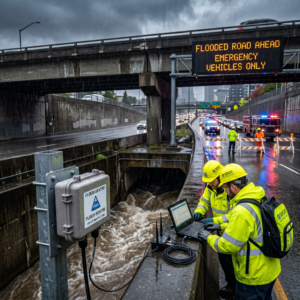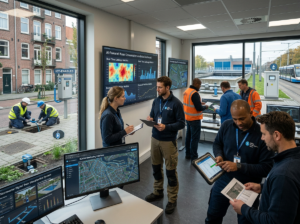
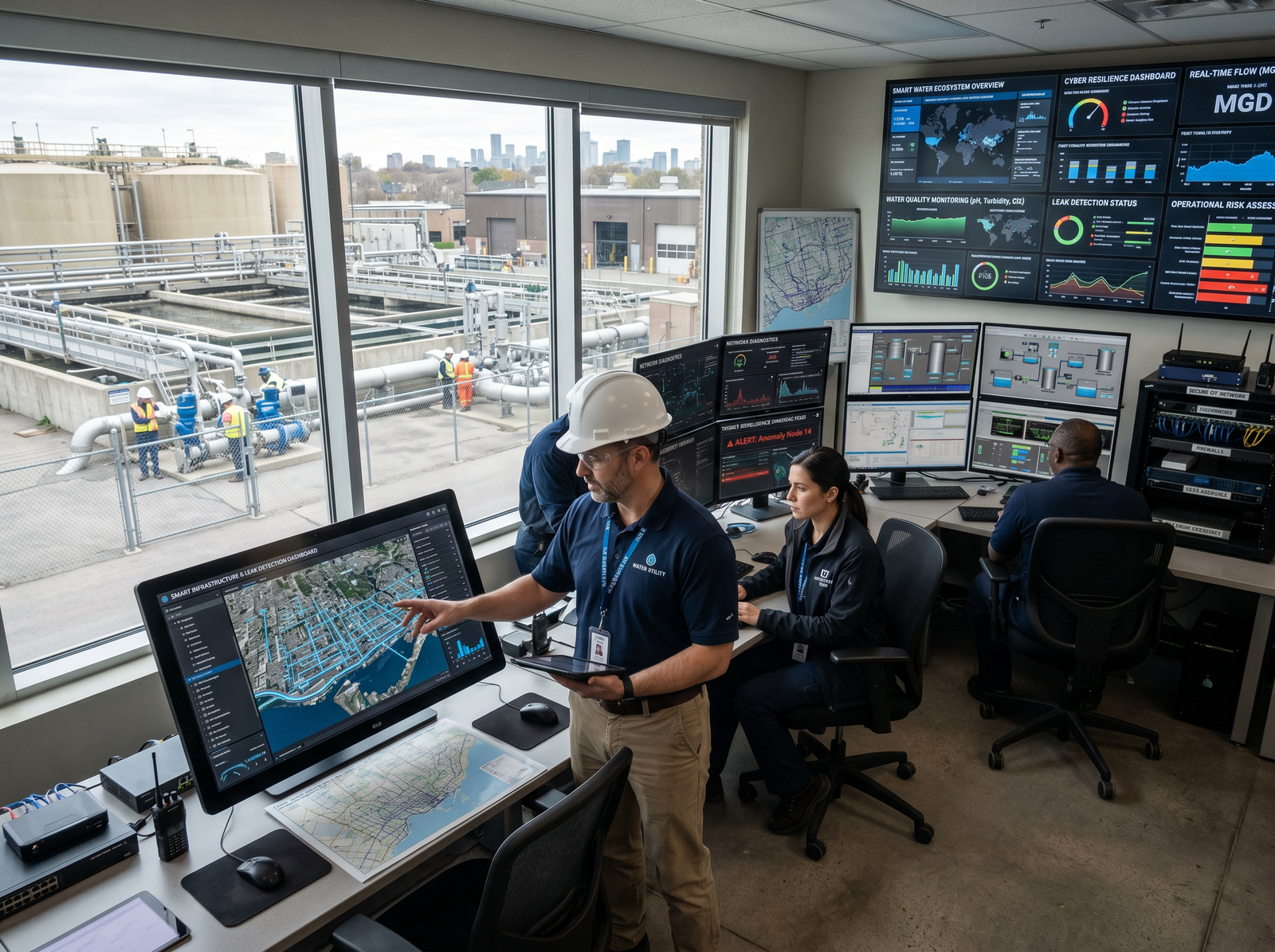
Water infrastructure is rapidly becoming more connected, automated, and data-driven. Across North America, utilities are deploying:
● smart sensors
● remote monitoring systems
● AI-assisted analytics
● digital twins
● advanced metering infrastructure
● cloud-connected operational platforms
These technologies are helping utilities improve efficiency, reduce water loss, optimize maintenance, and strengthen long-term infrastructure resilience.
At the same time, digital modernization is introducing new cybersecurity considerations that utilities must increasingly address as part of long-term infrastructure planning.
Water Infrastructure Is No Longer Only Physical Infrastructure
Historically, water utilities were viewed primarily as physical systems: pipes, pumps, treatment facilities, valves, and distribution networks.
Today, they are also highly interconnected digital environments.
Modern utility operations increasingly rely on systems responsible for:
● pressure monitoring
● treatment automation
● remote asset management
● operational analytics
● chemical dosing controls
● leak detection
● infrastructure diagnostics
This shift is transforming how utilities manage infrastructure while also increasing the importance of cybersecurity and operational resilience.
Why Cybersecurity Is Becoming a Larger Utility Priority
Critical infrastructure sectors globally are facing growing cybersecurity concerns as operational systems become increasingly connected.
Water systems are particularly important because disruption can affect:
● public health
● emergency response
● industrial operations
● healthcare facilities
● manufacturing activity
● regional economic continuity
Unlike some industries, water infrastructure often operates continuously with limited tolerance for operational interruptions.
As a result, utilities are increasingly evaluating cybersecurity as part of broader infrastructure resilience planning.
Digital Transformation Is Expanding Operational Complexity
The move toward smart water infrastructure creates significant operational benefits.
However, connected infrastructure can also increase operational cyber exposure if systems are not properly secured.
SCADA systems, industrial control environments, and remote operational technologies were often developed before today’s cybersecurity threat landscape evolved to its current level of complexity.
As utilities modernize systems and integrate additional digital technologies, cybersecurity is becoming more closely linked with operational continuity and infrastructure reliability.
The conversation is no longer simply:
“How do we modernize water systems?”
It is increasingly:
“How do we modernize securely and resiliently?”
Cyber Resilience Is Becoming a Strategic Infrastructure Issue
Cybersecurity within the water sector is increasingly being discussed beyond traditional IT functions.
Utilities are evaluating cyber resilience across areas including:
● infrastructure planning
● emergency preparedness
● operational redundancy
● vendor security standards
● incident response capabilities
● regulatory readiness
● long-term capital planning
This reflects a broader shift in how utilities view digital infrastructure risk management.
As infrastructure systems become more connected, cyber resilience is increasingly integrated into modernization strategy itself.
Collaboration Across the Sector Is Expanding
The complexity of infrastructure cybersecurity is driving greater coordination between:
● utilities
● technology providers
● cybersecurity specialists
● regulators
● federal agencies
● infrastructure operators
The industry is recognizing that operational technology environments require specialized security approaches that differ from traditional enterprise IT systems.
This is accelerating investment in:
● industrial cybersecurity platforms
● secure remote operations
● infrastructure monitoring
● resilience planning
● operational visibility tools
The Future of Smart Water Infrastructure
The next generation of water infrastructure will likely depend on a combination of:
● physical system reliability
● digital intelligence
● operational visibility
● infrastructure resilience
● cybersecurity preparedness
Utilities that successfully integrate these capabilities may strengthen:
● operational continuity
● emergency response readiness
● infrastructure efficiency
● long-term system resilience
● public confidence
In this environment, cybersecurity is becoming an increasingly important component of modern infrastructure strategy.
Final Thoughts
Water utilities are entering a new phase of digital transformation.
Smart infrastructure technologies are creating significant opportunities to improve operational performance, infrastructure visibility, and long-term system management across the sector.
As systems become more connected, cyber resilience is becoming increasingly central to infrastructure modernization itself.
The future of smart water infrastructure may depend not only on how intelligently systems operate, but also on how resiliently they are secured.